

How much energy is needed for snowmaking?
Use of new, energy-saving appliances
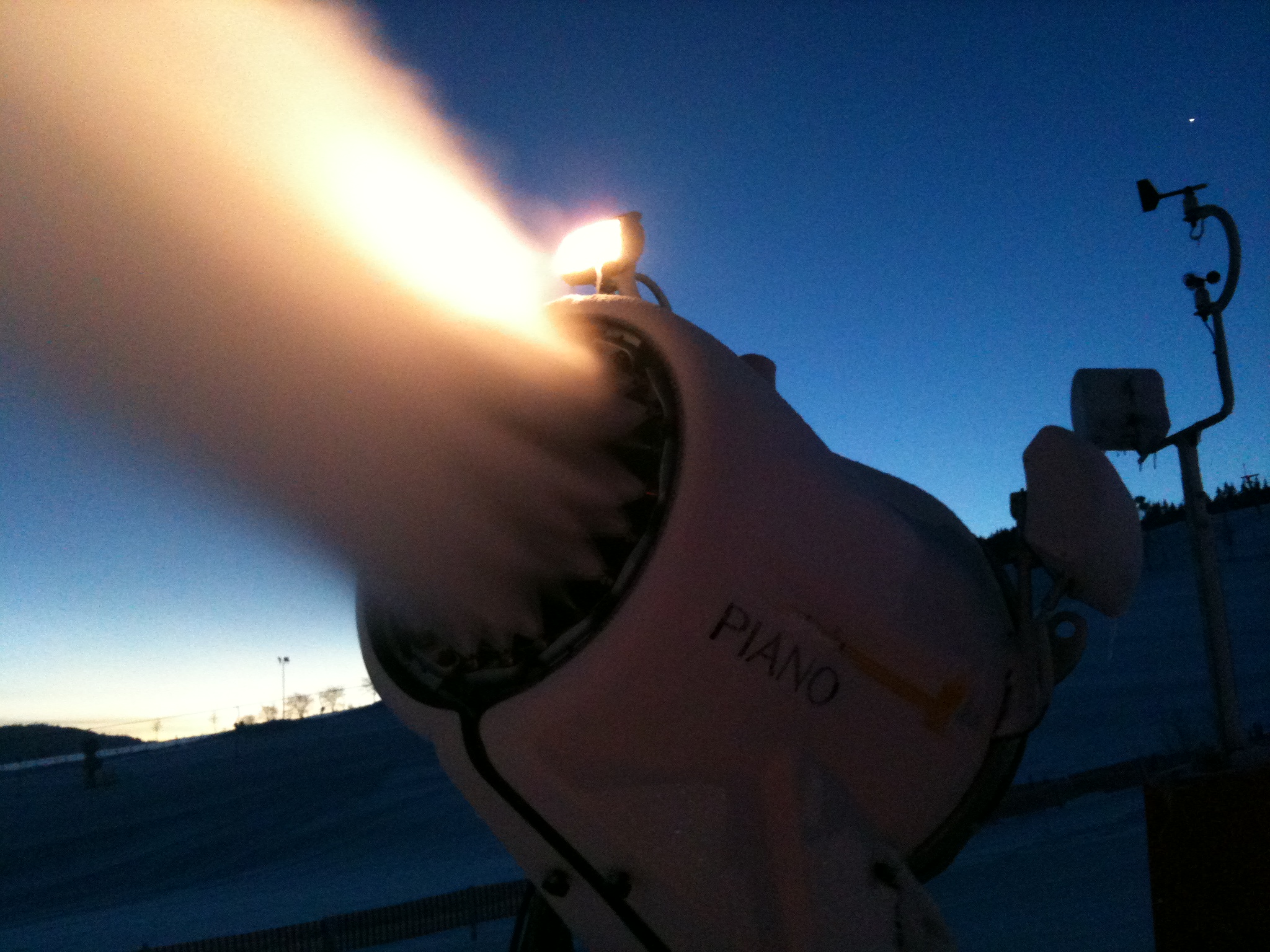
Technological advances have meant that snow-making machines now consume significantly less energy than earlier generations of equipment.
Modern fan-type machines produce significantly more snow for the same amount of energy than earlier generations of equipment. The increase in efficiency is particularly marked in the case of snow lances. Technical developments continue to advance.
Compared with other sports or leisure activities, the energy consumption – and thus the carbon footprint – of the ski resorts in the Sauerland Winter Sports Arena is lower**,** than is often assumed.
600,000 winter sports enthusiasts benefit
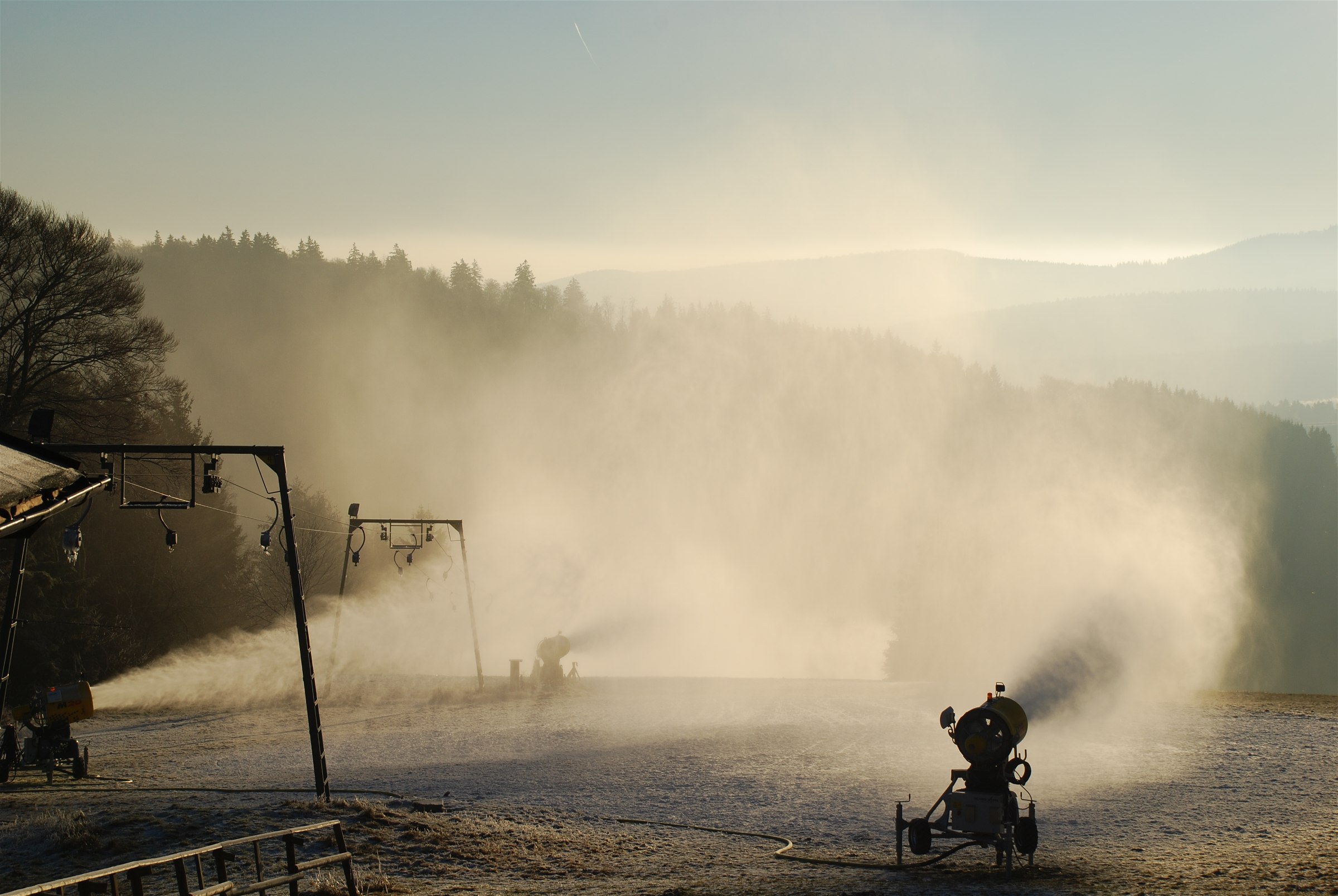
For snowmaking (30 cm) of all the slopes in the region that have a snowmaking system (65 km), the systems consume around 3 GWh of electricity over the entire season. A flight to the Caribbean and back with 200 people requires the same amount of energy. However, around 600,000 winter sports enthusiasts enjoy the region's ski slopes every season. In a consistently cold winter, one layer of basic snowmaking can be enough for the entire season; in changeable winters it can be two or three. Two or three cold days or three or four cold nights are often enough to create a base that lasts for many weeks.
Performance and energy requirements in comparison
Propeller gun at -3 °C: produces 9 m³ snow/h and requires 5 kWh/m³ snow (incl. pumping energy)
Propeller gun at -10 °C: produces 60 m³ of snow/h and requires 1 kWh/m³ of snow (incl. pumping energy)
Snow lance produces 2.5 - 9 m³/h depending on the temperature and requires 0.27 kWh/m³ of snow (water pressure plus compressed air)

Comparison with other sports and leisure activities
A Bundesliga matchday featuring nine matches and around 390,000 football fans requires around 12 million kWh of energy – used, amongst other things, for travel, pitch heating, floodlights and stadium operations. A single pitch heating system consumes as much energy in one day as a detached house does in a year, i.e. around 4,000 kWh.
Another major source of energy consumption in stadiums is the floodlighting system. Added to this are, in some cases, heated seats and other technical installations. The energy required to construct the stadiums is not included in this comparison.
Annual consumption of other leisure facilities:
Public sauna: approx. 350,000 kWh
Ice rink: approx. 2,600,000 kWh
Indoor swimming pool with a pool area of up to approx. 500 m²: approx. 2,100,000 kWh